Murder of Tracy Bond
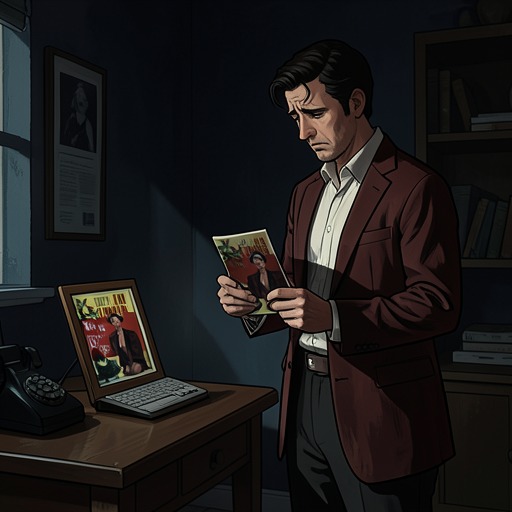
You Only Live TwiceMurder of Tracy Bond is the abrupt destruction of James Bond’s new marriage and the wound that precipitates his psychological collapse. Shot dead by Ernst Stavro Blofeld within hours of the wedding, Tracy leaves Bond alive but unable to put the loss behind him; eight months later, grief and self-blame still govern his sense of health, work, and future.
The Murder and Its Aftermath
Sir James Molony reconstructs the murder for M as the turning point in Bond’s decline. Bond had fallen in love with Tracy, whom Molony understood to be vulnerable and in need of his help, and married her. Within hours, Blofeld shot her dead. Bond escaped with no worse physical injury than a blow to the head, but the apparent contrast between that minor wound and the scale of the loss is central to Molony’s account: the damage that followed was psychological, not bodily.
Molony describes Bond’s condition as shock intensified by the belief that he was to blame for Tracy’s death. Bond lost his zest and became indifferent to both his work and his life. His collapse emerged in practical failures as well as despair: he bungled two assignments, nearly got himself killed on one, and made a mistake on the other that endangered others. For M, this sudden change in a previously dependable agent threatened to become a security risk; Molony instead treated it as evidence of a human crisis that could not be corrected by discipline alone.
On the last day of August, eight months after Tracy’s death, Bond sits in Queen Mary’s Rose Garden in Regent’s Park preoccupied with his failing health. He has spent months consulting doctors and other practitioners, sleeping badly, eating very little, drinking too much, and finding that his work has deteriorated. Their examinations reveal no basic physical disorder, yet their reassurances do not reach the source of his suffering. The murder thus remains present not through a recovered account of its details, but through its continuing consequences: Bond’s body appears medically sound while his life has lost its former direction.
The Search for a Cure
For months, Bond had moved through the consulting rooms of Harley Street, Wigmore Street, and Wimpole Street, seeking relief from specialists, general practitioners, quacks, and finally a hypnotist. He described his sleeplessness, lack of appetite, heavy drinking, and failing work, and answered the doctors’ questions truthfully. Each examination—blood pressure, urine, heart, and chest—ended with the same conclusion that nothing basic was physically wrong. Bond paid five guineas, then took another set of prescriptions to John Bell and Croyden: tranquillizers, sleeping pills, and energizers. The repeated medical verdict and renewed medication formed a cycle of treatment that addressed symptoms without changing the loss beneath them.
The hypnotist offered a different remedy, urging Bond to recover his manhood by finding a woman. Bond had already tried, but those encounters brought no restoration: some women cautioned him to take the stairs carefully, some wanted to be taken to Paris, and one asked with indifference whether he was feeling better. The hypnotist himself was not wholly objectionable to Bond, but his talk of wart removal and persecution by the BMA, followed by the quiet drone of his voice as Bond stared at a naked electric bulb, became intolerable. Bond abandoned the fifty-guinea course after completing only half of it and broke off the treatment. His turn toward the garden before returning to his nearby office marks another failed attempt to make ordinary remedies work against a grief that had unsettled his whole life.
Shock, Work, and Responsibility
Sir James Molony interprets Bond’s failures not as proof that he has become careless by nature, but as symptoms of a shock that has altered his ability to function. His proposed remedy had been to return Bond to the dangers and emergencies of his work, on the theory that active responsibility might interrupt the collapse. M’s account of the two assignments gives that approach a grimly practical test: Bond nearly died during one and made a mistake that put others at risk during the other. The results expose the limits of treating grief as a problem that professional pressure can simply overcome. For Molony, Bond’s self-blame over Tracy’s death is a burden neither he nor M can claim to understand from experience; recovery instead begins with recognizing that suffering can exceed what discipline or familiar expectations can contain.
A Changed Attention
Before Tracy’s death, Bond had treated health, weather, and the natural world as background to more urgent concerns. Health mattered chiefly when he had a hangover or needed to recover from physical damage; weather meant deciding whether to carry a raincoat or raise the hood of his Bentley Convertible; birds, bees, and flowers mattered in practical terms, according to whether they bit, stung, or smelled pleasant. In the garden, that hierarchy has been overturned. On the last day of August, eight months after the murder, these formerly incidental subjects occupy his mind. The change makes grief visible as more than sadness: it has altered what Bond can attend to and what counts as urgent. The rose garden becomes the setting in which a man accustomed to treating his body and surroundings as instruments confronts them as problems he cannot simply dismiss.